2026-08-23
When you replace a die bonder, tooling is the cost that is not on the quotation
When you compare two die bonders, the specifications line up and the quotations line up. The tooling does not.
A packaging line that has run for a few years accumulates tooling around its installed equipment: collets for each die size, ejector pins matched to die thickness, magazines and carriers, heater blocks, and the alignment recipes that go with them. On a high-mix line, several hundred part numbers is not unusual.
What incompatibility costs
Bringing in a machine with a different tooling interface means rebuilding all of that. Three separate costs follow:
- Tooling fabrication — scales with part number count, so the broader the product range the more it costs
- Build and debug time — usually measured in weeks, during which the new tool cannot enter production
- Process re-qualification — new tooling means placement parameters must be confirmed again, which can trigger customer-side product qualification
The third is the one most often underestimated. For products already qualified, a process change frequently requires running the qualification again, which can take longer than fabricating the tooling.
What compatibility removes
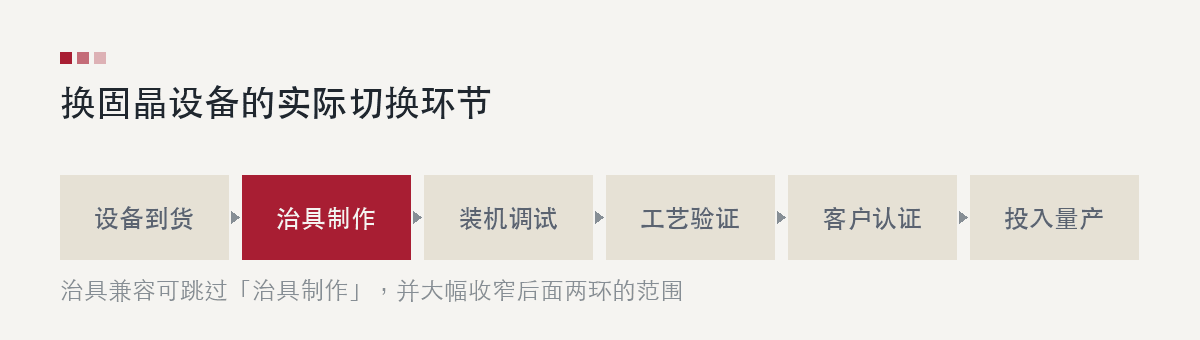
If the new machine accepts the existing tooling interface, two of those three costs shrink substantially: no fabrication cost and no fabrication lead time, and a much smaller change surface for process parameters, which narrows the scope of re-qualification.
A comparable machine footprint adds a further benefit: the line layout does not change, so cleanroom floor, services and material flow can stay as they are. That matters most when expanding inside an existing building, where freeing up new floor area can cost more than the equipment.
Questions worth confirming
- Which existing tooling systems the candidate accepts, and whether coverage is "most" or "all"
- Exactly which part numbers fall outside, and what rebuilding them costs in money and weeks
- Footprint difference against the installed equipment, and whether layout has to change
- Whether alignment recipes can be migrated or must be rebuilt product by product
The answers move the real total cost significantly, and none of them appear on a specification sheet.
How we approach it
- D-MARS PLUS — accepts most tooling from the FASFORD DB830 series; 2160×1400×1650mm, close to comparable platforms, so it does not demand extra floor area
- D-MARS 6600 — accepts DB800 series tooling
Our team has been building die attach equipment since 2000, and that history with these platforms is why the compatibility is achievable.
If you are evaluating a replacement, send us your installed models and tooling list. We can confirm coverage item by item and identify what genuinely needs rebuilding — that list alone will let you cost the switch properly.